FAQ’s
BEFORE YOUR APPOINTMENT
Yes – we are primarily an appointment-only studio.
If we happen to have availability on the day, we will always do our best to accommodate you. However, we are often booked a few days in advance, with weekend appointments commonly filling up a couple of weeks ahead.
Age requirements for piercings
We require valid photo ID for all piercing appointments.
18+
Clients aged 18 or over may attend alone with valid photo ID for all piercings, including:
- genital piercings
- nipple piercings
- tongue piercings
- cheek piercings
- dermal piercings
- surface piercings
16+
Clients aged 16 or over may have the following piercings with a parent or legal guardian present and valid photo ID:
- cartilage piercings
- lip piercings
- eyebrow piercings
- bridge piercings
- nostril piercings
- septum piercings
- navel piercings
14+
Clients aged 14 or over may have the following piercings with a parent or legal guardian present and valid photo ID:
- lobe piercings
- minor / simple cartilage piercings
12+
Clients aged 12 or over may have lobe piercings only, with a parent or legal guardian present and valid photo ID.
Please bring a valid government-issued photo ID to your appointment. We accept:
- passport
- full or provisional driving license
- Citizen Card
If you are under 18, you must attend with a parent or legal guardian, who must also bring their own valid photo ID.
If the surnames of the client and parent or legal guardian do not match, we may also need to see a birth certificate or other supporting documentation.
If you are visiting us for a specific jewellery change, consultation, or to discuss an existing piercing, it can also be helpful to bring along any relevant information, such as details of the jewellery currently in place.
We also recommend arriving well-rested, hydrated, and having eaten beforehand to help you feel as comfortable as possible during your appointment.
If you are unsure what to bring, please feel free to contact the studio before your visit and we’ll be happy to help.
Yes – there is usually space for one person to accompany you to your appointment.
For clients under 18, this space may need to be used by your parent or legal guardian, who must attend with you.
If you are over 18, you are very welcome to bring one companion for support.
Our larger treatment room can sometimes accommodate one or two additional people, however room allocation depends on the day’s bookings and unfortunately cannot be chosen in advance.
If bringing more than one person is important to you, please give the studio a call ahead of your appointment and we’ll be happy to let you know what may be possible.
To allow your piercer to provide the best possible care in a calm, professional environment, there may be occasions where we ask that only one companion attends on the day. Please don’t be offended by this — it is simply to ensure we have the space and focus needed to look after you safely and comfortably throughout your appointment.
To help make your appointment as comfortable as possible, we recommend having a good night’s sleep, a shower, and eating a good meal beforehand — breakfast if you’re coming in the morning, or a substantial meal if your appointment is later in the day.
Please make sure you arrive well hydrated and avoid attending on an empty stomach, as this can increase the likelihood of feeling faint or unwell during your appointment.
Please do not attend the studio if you are hungover, feeling unwell, or currently ill. If this happens, just give us a call and we can help rearrange your appointment.
Please also remember to bring your valid photo identification, and if you are under 18, your parent or legal guardian must attend with you and bring their own ID as well.
We recommend wearing comfortable clothing that allows easy access to the area being pierced, and avoiding anything overly tight or restrictive around the placement site.
If you have any questions about healing around holidays, travel, swimming, or upcoming events, please take a look at our linked holiday guidance page, as timing can make a real difference to how comfortably your piercing heals.
If you are unsure whether it is the right time to be pierced, please get in touch before your appointment and we’ll be happy to advise.
PIERCINGS & HOLIDAYSMost appointments are booked in 30-minute slots or longer, depending on the service you have chosen.
As a guide, a standard single piercing appointment will usually take around 30 minutes, which allows time for:
- consultation and anatomy assessment
- jewellery selection
- consent and ID checks
- marking and placement discussion
- the piercing itself
- aftercare guidance
If you are having more than one piercing, please allow an additional 15 minutes or more for each extra piercing.
Training appointments may also take a little longer, as extra time is built in to allow for teaching and supervision while still ensuring your care, comfort, and consent remain the priority throughout.
If you are unsure how much time to allow for your visit, please feel free to contact the studio before your appointment and we’ll be happy to advise.
Please do let us know as soon as possible if you think you may be running late.
Unfortunately, our appointment diary is often very full, and timings are carefully planned to allow for consultation, jewellery selection, sterilisation, and aftercare without rushing your appointment.
If there is an opportunity to accommodate a late arrival, we will always do our best by adjusting the booking where possible.
However, if you are more than 10 minutes late, it is unfortunately quite unlikely that we will still be able to carry out the appointment, as this can affect clients booked after you.
Please keep this in mind when choosing your appointment time and allow extra time for travel, parking, and any unexpected delays.
That said, we are human and understand that sometimes things happen that are outside of your control. Delays and unforeseen issues are always considered on a case-by-case basis, and we will always do our best to help where we can.
If you are unable to attend your appointment, please let us know as soon as possible.
We kindly ask for a minimum of 4 hours’ notice for cancellations or changes wherever possible. This allows us the opportunity to offer the appointment time to another client.
Our diary is often very full, and appointment times are carefully allocated to allow for consultation, jewellery selection, sterilisation, and aftercare without rushing your visit.
If you fail to attend your appointment without notice, or are unable to attend due to a significant late arrival, a missed appointment charge may apply.
That said, we are human and understand that sometimes unexpected situations arise that are outside of your control. Illness, emergencies, travel issues, and unforeseen delays are always considered on a case-by-case basis, and we will always do our best to help where we can.
When choosing your appointment time, please allow plenty of time for travel, parking, and any possible delays.
CHOOSING YOUR PIERCING & JEWELLERY
At Blue Lotus, we use implant-grade jewellery only for all initial piercings.
Our standard jewellery is ASTM F-136 implant-grade titanium, the professional standard recommended for safe and reliable healing. This is the same grade of titanium used in medical settings and has an exceptionally low allergy rate
Every piece is selected for both safe healing and beautiful long-term wear, with a high-polish mirror finish to provide the smoothest possible surface against the tissue and reduce unnecessary irritation during healing.
We offer a carefully curated range of jewellery styles, including:
- implant-grade titanium essentials
- internally threaded jewellery
- threadless / press-fit jewellery
- solid gold upgrades
- custom and statement pieces
All jewellery is chosen with your anatomy, placement, and personal style in mind during your appointment.
For certain piercings and specific placements, we may also offer 14k or 18k Gold, niobium, or glass, depending on what is most suitable for the area and your individual needs.
Our aim is always to begin your piercing journey with jewellery that is safe, beautifully finished, and chosen specifically for you.
This depends entirely on the area being pierced, your individual anatomy, and what will give the best possible healing outcome.
As a professional principle, the shape of the jewellery should directly follow and mimic the shape of the channel being created. This helps to minimise unnecessary movement and irritation, and supports smoother healing.
For this reason, jewellery is always chosen based on your individual anatomical variation and is specifically measured for you in terms of thickness, shape, and length.
In many cases, it is unlikely that a fresh piercing will be carried out with a ring unless that particular area is well known to heal successfully with one, or where a ring may actually offer an additional healing advantage.
For many placements, a straight or appropriately shaped post is often the best choice during the initial healing period, with the option to move into a ring style later once the piercing is stable and well healed.
During your appointment, we will always talk you through the most suitable jewellery for both safe healing and the look you would like to achieve long term.
Yes – implant-grade titanium is our standard jewellery material for most initial piercings.
We primarily use ASTM F-136 implant-grade titanium, which is widely regarded as the professional standard for safe body piercing jewellery. It is bio-compatible, lightweight, highly polished, and has an exceptionally low risk of causing reactions, making it ideal for healing piercings.
Titanium is used for the majority of our initial bars, posts, and decorative ends, and each piece is carefully selected and measured to suit your anatomy and the placement being pierced.
For many ring styles, we also use niobium, which is another high-quality, body-safe material.
Niobium is particularly well suited to rings because it offers excellent flexibility, making it easier to open, close, and adjust the ring safely without compromising the shape. This allows for a beautiful, smooth fit while still maintaining excellent healing standards.
Both titanium and niobium are chosen based on what is most appropriate for the piercing placement, jewellery style, and your individual healing needs.
During your appointment, we’ll always guide you through the most suitable options for both healing and long-term wear.
Yes – absolutely. We offer a beautiful range of solid gold jewellery options, and in many cases we can pierce with solid gold posts from the start.
That said, many fresh piercings require a downsize within a relatively short period of time as the initial swelling settles. Because of this, many clients choose to begin with an implant-grade titanium post, which can be anodised to a beautiful gold tone, and then invest in their solid gold post at the downsize appointment.
We also carry a vast selection of solid gold ends and attachments, which can be worn from the very first moment of your piercing. These decorative gold pieces transfer directly onto your downsized jewellery later, allowing you to keep the same beautiful look throughout the healing process.
This approach often offers the best balance of safe healing, practicality, and long-term aesthetics, while allowing you to enjoy a gold finish from the very beginning.
For clients who would prefer to start with a full solid gold post, we are always happy to discuss the most suitable options based on the placement, expected healing pattern, and likely downsizing needs.
This is exactly what we’re here to help with.
Every person’s anatomy is unique, and not every piercing is suitable for every body. During your appointment, your piercer will carefully assess the area, talk through your ideas, and help you understand what can be safely performed and what is likely to heal well for you.
We look at factors such as:
- the shape and structure of the area
- available tissue depth and support
- movement and pressure points
- your lifestyle and day-to-day activities
- how the piercing is likely to heal long term
Our aim is always to recommend options that are not only beautiful, but also realistic and safe for successful healing.
If the exact piercing you had in mind is not the best fit for your anatomy, we will always talk you through the reasons and help you explore other options that can give a similar aesthetic.
We’re also very happy to help you plan future piercings and curate your overall project with you — whether that’s building a carefully styled ear, planning facial placements, or mapping out how multiple piercings will work together over time.
Many clients enjoy treating this as a collaborative process, and we love helping bring those ideas to life in a way that suits both your anatomy and your personal style.
That’s absolutely OK — many clients come to us knowing they would love something new, but aren’t yet sure exactly what that is.
It really helps to have at least a rough idea of the area or style you’re drawn to, as this gives us something to build from. Even if it’s as simple as “I’d love something for this ear” or “I want something delicate and gold”, that’s a perfect starting point.
From there, we can help guide you through what will suit your anatomy, heal well, and work beautifully with your overall look.
If you’d like a little guidance before booking, you’re very welcome to have a chat with one of our team first. You can do this by:
- popping into the studio
- sending us an email
- giving us a call
We’re always happy to talk through ideas and help you explore your options.
You may also find inspiration by looking through our gallery and social media posts, where you can see previous work, jewellery styles, and curated piercing projects.
Many clients enjoy treating this as a collaborative process, and we love helping you plan and curate your piercing project with you, whether it’s a single piece or the beginning of something larger.
Yes – absolutely.
Once the initial healing period is complete, the style and level of decoration can often be gradually built upon and enhanced.
Healing times are different for every piercing and every person, so your piercer will always advise you on when it is safe to make changes.
Once a piercing is fully healed, it is often possible to change between styles — for example, moving from a post to a ring, or from a ring back to a post — for almost every placement.
That said, some limitations do apply depending on the area, your anatomy, and how the piercing has healed.
It is always important to follow your piercer’s advice regarding the thickness, shape, and fit of the jewellery, even in a fully healed piercing, as the wrong style or size can still cause irritation, pressure, or long-term changes to the channel.
We are always happy to help with jewellery changes, styling updates, and evolving your piercing project over time.
Yes – absolutely. We are very happy to help create fully custom jewellery options.
Many bespoke builds are created by combining pieces from different specialist manufacturers. For example: an end from one company and a post from another, carefully selected for style, fit, and compatibility.
Because we work with high-quality jewellery brands from around the world, custom pieces can sometimes take a little time to come together, as manufacturing lead times, stock availability, and compatibility between components can vary.
If you are looking for something custom, it really helps to come in with a little inspiration to help us guide you more effectively.
This could be:
- photos of styles you love
- screenshots from our social media or gallery
- gemstone colours
- metal preferences
- a rough idea of the overall look you want to achieve
From there, we can help curate something that suits both your anatomy and your aesthetic, whether it’s a single statement piece or part of a larger project.
Custom jewellery is one of our favourite parts of the process, and we love helping clients build something truly personal.
DURING YOUR APPOINTMENT
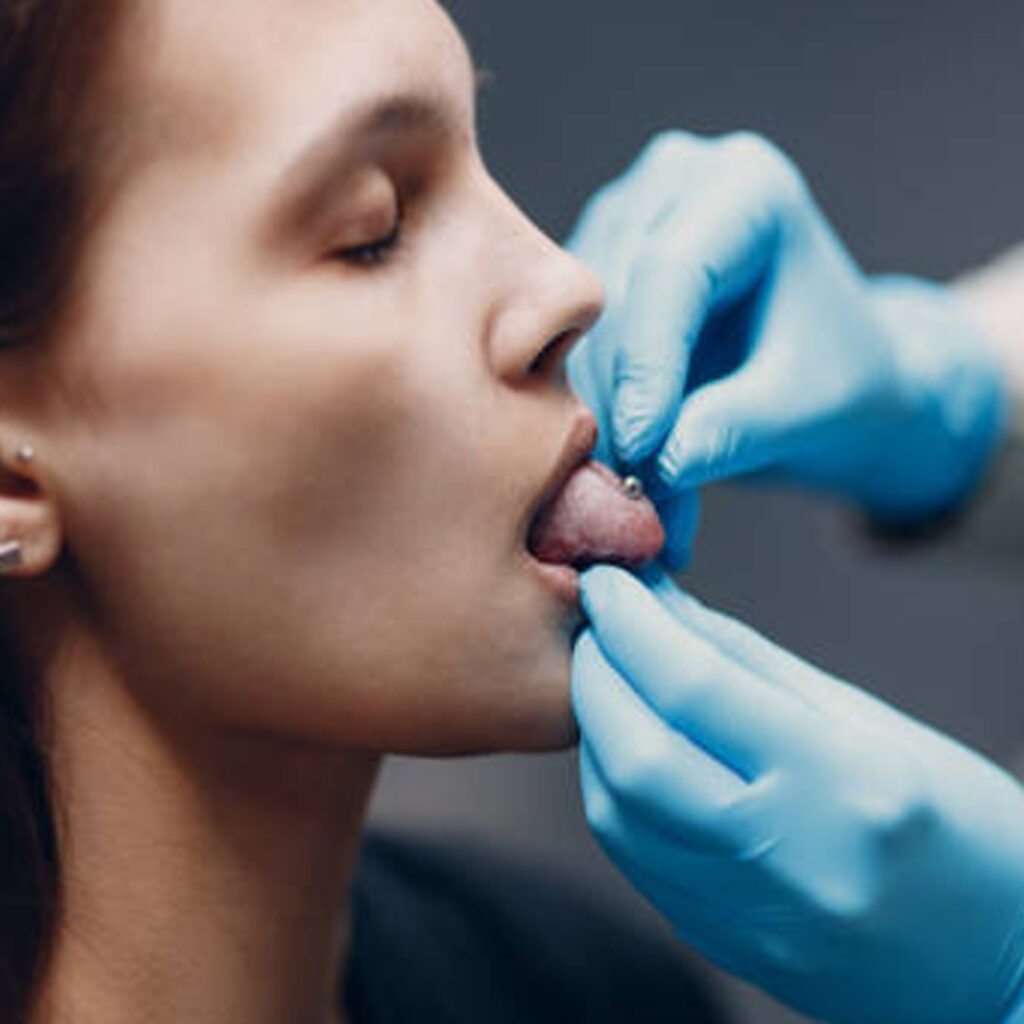
You are absolutely not alone: we are very experienced and well accustomed to working with nervous clients, including those with a needle phobia.
Every person is different, and we always approach this on an individual basis, taking the time to work in a way that feels calm, supported, and manageable for you.
You will never be shown the needle at any point during the procedure.
In fact, we recommend that all clients close their eyes or look away, not just the nervous ones, as this often makes the experience much more comfortable.
If you let us know in advance, we may be able to allow extra time within your appointment so that everything can be taken at a slower pace without feeling rushed.
You are also very welcome to visit the studio beforehand, meet the team, and familiarise yourself with the environment before booking or attending your piercing appointment. Many clients find that seeing the space, asking questions, and talking through the process in person helps reduce a lot of the anxiety.
Our aim is always to make the experience feel as calm, professional, and supportive as possible.
Your appointment is designed to be calm, thorough, and never rushed.
When you arrive, we’ll begin by checking your ID and consent details, and then take time to talk through the piercing you’re considering.
This includes discussing:
- the area you would like pierced
- whether it is suitable for your anatomy
- what will heal best for you
- jewellery style and material options
- any questions or concerns you may have
Once we have agreed on the best option, we will help you choose your jewellery and carefully measure it for your anatomy in terms of thickness, shape, and length.
Your jewellery is then professionally sterilised in our dedicated sterilisation room before use.
At this stage, we will explain the aftercare and healing process in full, so you understand how the piercing will need to be looked after before the procedure is carried out.
Your piercer will then wash up, clean the area to be pierced, and carefully mark the placement for your approval.
You will always have the opportunity to check the placement and let us know if you would like any small adjustments before proceeding.
Once you are happy and ready, your piercer will prepare their sterile setup, the piercing itself is performed using aseptic technique with sterile, single-use equipment in a calm, professional environment.
Afterwards, we will answer any final questions and advise when to return for a downsize or check-up if needed.
We are always happy to help plan future placements or curate a larger project with you as well.
Yes – briefly.
Most piercings are over in just a moment, and the sensation varies depending on the area and the individual.
Some feel as familiar and easy as a scratch or hair removal, while others can feel a little more similar to a quick injection or sharp pinch.
We use a gentle pre-piercing desensitising pinching technique, guide you through breathing techniques, and apply a sterile cold compress immediately afterwards to help make the experience as comfortable as possible.
For most clients, the anticipation is far worse than the piercing itself.
No – we do not use piercing guns.
All piercings at Blue Lotus are carried out using sterile, single-use needles, which allow for far greater accuracy, less tissue trauma, and a more controlled healing process.
There are many reasons why this is the safer and more professional option, all chosen with your comfort and healing in mind.
If you’d like to know more, we have a dedicated page explaining our gun-free policy in more detail.
NO GUN POLICYSterility and aseptic technique are at the heart of everything we do.
Every item that touches your skin before the piercing is either single-use or pre-packaged sterile. This includes items such as:
- skin cleansing wipes
- sterile drapes
- sterile gauze and cold compresses
- single-use marking pens / skin markers
- disposable applicators
During the piercing itself, all equipment used is either sterile and single-use or professionally sterilised prior to use.
This includes:
- sterile, single-use needles
- sterile jewellery
- sterile disposable consumables
- sterile tools where appropriate
Your jewellery is sterilised in our dedicated sterilisation room immediately before the procedure.
The piercing is then carried out using aseptic technique, meaning your piercer works in a carefully controlled way to maintain sterility throughout the procedure and minimise any risk of contamination.
This is one of the key reasons we allow time within every appointment for proper setup, sterilisation, and aftercare.
Absolutely.
At every stage of your appointment, we are seeking your consent to perform the piercing for you.
You are always in control, and you can pause, ask questions, take a moment, or decide not to go ahead at any point during the process.
Changing your mind, feeling unsure, or simply not feeling it on the day are all completely normal.
There may unfortunately be some cost implications, and a missed appointment fee may need to be applied depending on the time taken, as we still need to cover our team’s time and studio overheads.
However, please do not let that pressure you into going ahead.
It is always better to pay a small fee than to force yourself through a situation that does not feel right for you.
Your comfort, consent, and confidence in the decision always come first.
HEALING & AFTERCARE
Healing time varies depending on the area of the body, your age, general health, lifestyle, and how well the area can be protected during day-to-day life.
Because of this, there is no single healing time that suits everyone.
In many cases, the initial healing stage is well underway within the first few weeks, and discomfort or swelling has usually settled by then.
After this stage, the focus is often less about cleaning and more about protecting the piercing from movement, knocks, pressure, and over-cleaning, all of which can delay healing.
Your piercer will ask questions about your routine, lifestyle, work, exercise, travel plans, and general healing capacity to make sure the aftercare advice is tailored specifically to you.
We will also advise on the expected healing time for the particular area being pierced, including when to return for downsizing or a check-up if needed.
Every piercing heals at its own pace, and we are always happy to support you throughout the process.
In the first few days, it is completely normal for the area to feel a little red, warm, swollen, and sensitive.
This is part of the body’s normal inflammatory phase of healing, the very first stage where your body begins repairing the tissue.
You may notice:
- slight redness around the piercing
- mild swelling / inflammation
- tenderness or sensitivity when touched
- a slight throbbing or sensitivity
- possible a dot of blood or two, rare but possible
It is also very common to see a clear or slightly whitish fluid around the jewellery. This is called lymph fluid, and it is a normal part of healing. When it dries, it can sometimes form small crusts around the jewellery.
If your ever concerned, reach out to our team. We are always happy to help and reassure if needed.
Yes – in almost 90% of cases, the answer is yes.
There is always an exception to any rule, and every body heals a little differently, but it is best to expect that a downsize will be needed.
Initial jewellery is usually fitted slightly longer to safely allow for swelling in the early stages of healing.
Once that swelling has settled, the jewellery often needs to be changed to a shorter, better-fitting post to reduce movement, improve comfort, and support long-term healing.
We will let you know at your appointment whether we expect you to need a downsize, and we will guide you again at your check-up appointment based on how your piercing is healing.
Even if everything feels comfortable, downsizing is often an important part of the healing process and should not be overlooked.
During this stage, the most important things are gentle cleaning and protecting the area.
Try to avoid:
- touching it with unwashed hands
- pools/saunas and shared waters
- twisting or moving the jewellery
- tight clothing over the piercing
- sleeping on it
- catching it on clothing or hair
- cleaning it too often
Sometimes less is more when it comes to healing.
Your piercer will explain the best cleaning and protection advice for your specific piercing and lifestyle.
If anything feels unusual or you are unsure, please contact the studio and we will be happy to help.
After your downsize appointment, you can often begin to slowly switch things up a little.
This might include choosing a bolder attachment, changing the decorative end, or adding styling elements such as a chain hanging from the post, depending on the area and how it is healing.
These kinds of changes are often possible before the piercing is fully healed, as long as the main post size and fit remain appropriate.
Changing the jewellery style completely for example: switching from a post to a ring, or changing the overall shape of the jewellery – should wait until the piercing is fully healed.
This is really important, as changing styles too early can create unnecessary movement and irritation, which may delay healing.
Your piercer will always be happy to advise you on what is safe to change and when, based on the specific area and how your body is healing.
First of all, please reach out to us directly as soon as possible.
We would always much rather hear from you early, even if it turns out to be something completely normal. Yore never a bother getting in touch – that’s what we are here for.
You are very welcome to:
- pop into the studio for us to take a look
- give us a call
- send us clear photographs by social media
Often, what feels worrying is part of the normal healing process, such as redness, swelling, lymph crusting, or sensitivity in the early stages. Your piercer will be able to help you work out whether what you’re seeing is normal healing, irritation, or something that needs extra support.
If it is outside of studio hours and you need immediate guidance, we also have a page covering our most common piercing healing concerns, link below
This guide covers common issues such as swelling, bumps, irritation, and delayed healing.
Please remember – if you are ever unsure, it is always better to ask. We are here to help support your healing journey.
Piercing problems? - read help hereYes – absolutely.
We will advise you on when to come back for a check-up based on the area pierced and how we expect it to heal.
All of our team are professional piercers and are able to assist with any piercings that are easily accessible without removing clothing.
If your piercing is in an area beneath clothing, we will usually book your check-up appointment at the time of your piercing appointment, or arrange one over the phone if needed.
We are always happy to support you throughout the healing process., even if you have been pierced elsewhere.
MEDICAL, SAFETY & LIFESTYLE QUESTIONS

Unfortunately, we are unable to offer piercing services while you are breastfeeding.
For your safety and to support the best possible healing outcome, we advise waiting until at least three months after you have finished breastfeeding before booking your piercing appointment.
If you are unsure about timing or would like to plan ahead, please feel free to contact the studio and we will be happy to advise.
In most cases, yes — it is absolutely possible to be pierced safely.
However, there are some medical conditions, medications, and circumstances that may affect whether a piercing is suitable, how it heals, or what aftercare advice we give.
For your safety, if you are unsure, we recommend speaking with your GP or relevant health professional before booking. A brief note or confirmation of your current health status can be very helpful and allows us to give you the most appropriate advice and aftercare.
Please let us know before your appointment if you have any of the following conditions, or are taking medication related to them:
- diabetes
- epilepsy
- tuberculosis (TB)
- hepatitis
- HIV or AIDS
- haemophilia or other bleeding disorders
- latex allergy
- ezema/dermatitis
- heart conditions
- eczema or psoriasis
- herpes
- asthma
- prone to fainting
- current infections
- blood-thinning medication
This does not automatically mean we cannot pierce you — it simply helps us assess whether it is safe, suitable, and likely to heal well for you.
If you are ever unsure, please contact the studio before booking and we will be happy to guide you.
In many cases, yes – but this is a decision best made after receiving advice from your surgeon or specialist team.
Generally, once you have completed all of your scheduled follow-up appointments and have been fully discharged, there are usually no issues. However, some surgeons may recommend waiting longer depending on the type of procedure, how the tissue has healed, and whether there is any ongoing scar remodeling.
Please be aware that some surgeons may not continue follow-up care after a piercing has been performed without their approval, or may be limited in how they can assist with concerns relating to their surgical work if the area has been pierced beforehand.
For this reason, we strongly recommend discussing your plans with your surgeon first.
In some cases, reconstructed nipples may also be suitable for piercing, but this would always require a consultation first so we can discuss the anatomy, sensation, tissue stability, and healing considerations in more detail.
If you are unsure, please feel free to book a consultation or contact the studio before booking.
It is not always essential to remove your jewellery, but in some situations it may be necessary.
Please discuss this with your surgeon, physician, or radiology team in advance, as their requirements can vary depending on the procedure and the area being scanned or operated on.
Our implant-grade titanium jewellery is non-magnetic, which means it is not attracted to the MRI magnet. However, this does not always mean it can remain in place, as the imaging team may still request removal depending on the area being scanned and whether the jewellery could affect the image quality.
If removal is needed, we may be able to help by fitting a temporary retainer to help keep the channel open.
We offer acrylic and glass retainers, which may be suitable depending on the placement and the type of procedure.
It is important to be aware that even brief removal of jewellery from a piercing can sometimes lead to surprisingly rapid closure of the channel, making reinsertion difficult or, in some cases, impossible.
For this reason, we strongly recommend speaking with us before your appointment so we can help you plan the safest and most appropriate option.
This can mean two slightly different things, so it’s helpful to think about the type of illness.
If you are currently unwell with something temporary, such as a cold, flu, fever, stomach bug, or similar illness, we strongly recommend waiting until you are feeling better before attending your appointment.
When you are poorly, your body is already working hard to support your recovery and may not be able to focus as effectively on healing a new piercing.
As these illnesses are usually short-term, it is always best to wait until you are well enough to give your piercing the best possible start.
It is also important to consider the well-being of our team and other clients. If you are feeling unwell, please think about how you would feel being pierced by someone who might make you poorly.
If you are living with a chronic illness or long-term medical condition, it may still be completely possible to be pierced safely.
In these circumstances, we recommend discussing it with both your piercer and your healthcare professional, so you can understand any possible effects your condition or medication may have on healing and make an informed decision.
If you are unsure, please contact the studio before your appointment and we will be happy to advise.
TROUBLESHOOTING & EXISTING PIERCINGS
Yes – absolutely.
At Blue Lotus, we simply want everyone to have beautiful, healthy, well-healed piercings, no matter where they were originally done.
We are always happy to assist with concerns relating to piercings carried out elsewhere, whether that’s:
- healing advice
- irritation or bumps
- jewellery changes
- downsizing
- troubleshooting
- assessing whether a piercing is viable long term
Our priority is helping you achieve the best possible healing outcome and long-term result.
If you’re unsure what is happening, please feel free to pop into the studio, give us a call, or send us clear photographs, and we’ll be happy to help.
Yes – we are often happy to help with jewellery changes using your own jewellery.
We are most comfortable working with jewellery from the manufacturers and brands we already use, as we are familiar with their quality standards, sizing systems, and guarantee policies.
That said, we will never insert jewellery that we feel is unsuitable, unsafe, damaged, or in any way likely to cause harm or irritation.
Your safety and the health of your piercing will always come first.
If your jewellery meets our professional standards but is not from one of our usual suppliers, we may still be able to assist. In these cases, we may ask you to sign a disclaimer, as we cannot take responsibility for any breakage, threading issues, or manufacturing faults that may occur during the change.
If you are unsure whether your jewellery is suitable, feel free to bring it in for us to assess before your appointment.
Yes – absolutely.
We have a thorough process of evaluation and troubleshooting, supported by many decades of combined experience, to help you work out what is causing the irritation and how best to support healing.
This may include looking at:
- jewellery fit and length
- placement and angle
- pressure or sleeping habits
- aftercare routine
- movement, hair, or clothing friction
- whether a downsize is overdue
- extrinsic factors
In many cases, once the underlying cause is identified and corrected, the piercing can settle beautifully.
That said, not every piercing can be saved, and we will always be honest with you if we feel that removal is the safest or most realistic option.
There are also occasions where we can help get the basics back under control, but the piercing may still not respond as we would hope.
The most important thing is to seek advice early: the sooner a problem is identified, the easier it is usually to fix.
If you think something isn’t right, please pop into the studio, call us, or send clear photographs so we can help as soon as possible.